by MAGGIOLI
As digital services grow, so does the amount of personal data we share every day. This makes consent management a crucial part of today’s privacy landscape. People need simple ways to grant, review, and withdraw permission for how their data is used. Because consent touches on legal, ethical, and technical issues, approaches to managing it vary widely [1].
Key Concepts
Consent management covers the methods that allow individuals to provide, control, and revoke permissions for data processing. Consent is an individual’s affirmative agreement communicated to data collectors. Bonnici West & Grima [1] describe it as managing the tools that enable consent transactions and shape legal/ethical relationships between parties. It includes collecting consent through digital interfaces, enforcing usage conditions, and supporting consent revocation.
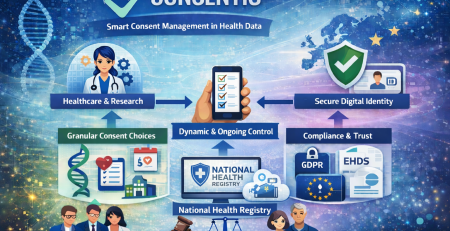
A key distinction exists between static consent (one-time agreements) and dynamic consent, which allows ongoing and reversible control. Merlec et al. [2] describe dynamic consent as enabling users to update preferences at any time. This flexibility benefits evolving contexts like research but increases complexity, as changes must be tracked and revocations enforced.
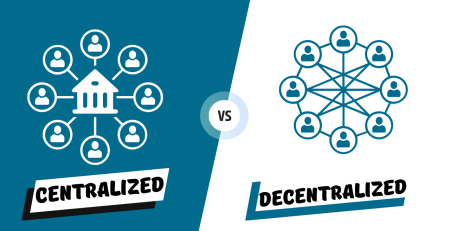
Regardless of approach, certain principles remain constant: consent must be informed, specific, freely given, and unambiguous (as required by GDPR) [3]. Systems must provide transparency, user control, and verifiable audit trails. Centralised, traditional consent mechanisms often struggle to offer sufficient transparency and accountability.
Main Phases of Consent Management
Consent management systems generally include three main steps: collecting consent, storing consent, and using stored consent.
Collection of Consent
Consent may be gathered through websites, mobile apps, CRM (Customer Relationship Management) systems, marketing tools, contact centres, or CMPs (Consent Management Platforms). A key challenge is ensuring informed consent, users may want to give partial consent or later withdraw it, especially in contexts like healthcare. Dynamic consent systems must support such granular and changeable preferences, adding complexity.
Storage of Consent
Collected consent must be consolidated and securely stored in a protected system acting as a single source of truth. Proper storage ensures security and regulatory compliance. Data retention must be limited to what is necessary, with organisations defining and enforcing clear deletion policies as required by GDPR (Recital 39).
Use of Consent
User data may be shared with third parties based on obtained consent. Major challenges include ensuring that consent is managed transparently, efficiently, and in compliance with privacy laws. Users must be clearly informed about data usage and able to revoke consent easily [4] .
Final Thoughts
Consent management is evolving from basic checkbox forms to more dynamic, user-centric solutions. As data ecosystems grow more connected, organisations must adopt systems that offer flexibility, transparency, and strong technical guarantees. Dynamic consent holds great promise, but getting it right requires careful design and robust privacy-preserving technologies.
[1] Bonnici West, M., & Grima, S. Consent Management Platforms: Tools for Data Protection Compliance, 2019.
[2] Merlec, S., et al. Dynamic Consent Management in IoT and Data Sharing Environments, 2020.
[3] Regulation (EU) 2016/679 (GDPR), General Data Protection Regulation, Official Journal of the European Union, 2016.
[4] European Data Protection Board (EDPB) Guidelines 05/2020 on consent under Regulation 2016/679, 2020.